
 Insight
 Engage
 Convert
 Data
 Grip
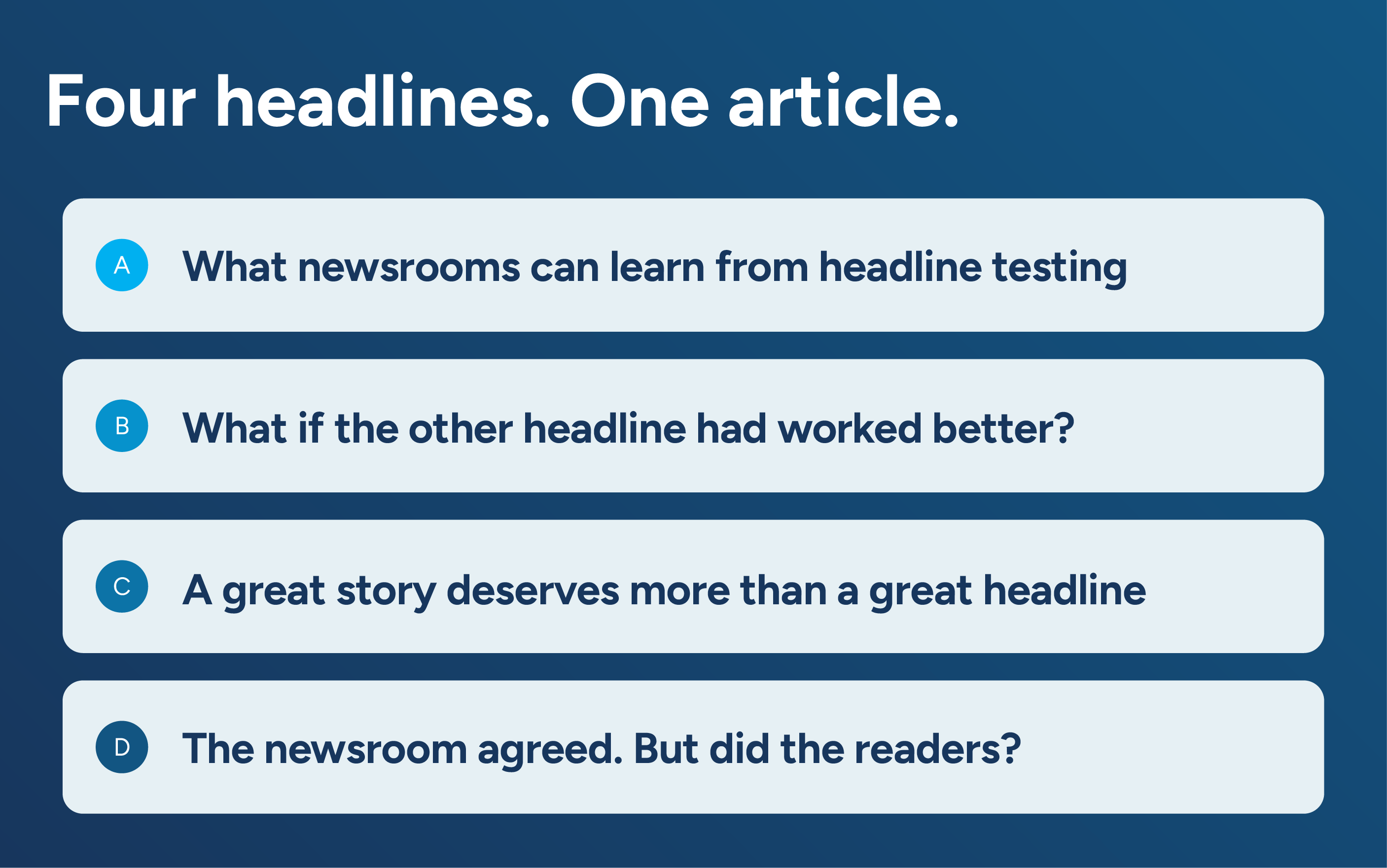
Four possible headlines for this very article. And probably four rather different opinions on which one works best.
One sparks curiosity, another gets straight to the point. Perhaps you had an immediate favourite. Or perhaps you'd have spent a good ten minutes debating the options in an editorial meeting.
Newsrooms make decisions like these every day. Sometimes after a lengthy discussion, sometimes between meetings, and sometimes simply because someone has to make the call. Experience, editorial judgement and a good understanding of the audience all go a long way.
But whether the newsroom's favourite is also the readers' favourite is another matter.
There's more to it than the headline
Newsrooms put a great deal of work into choosing, researching and producing their stories. Yet the job doesn't end when an article is ready to publish. Which story leads the homepage? Which article deserves another prominent slot? And which teaser actually makes someone want to click?
After all, even a great story needs to catch the reader's eye.
Data already helps inform many of these decisions. But an article's performance doesn't necessarily tell us why it did well. Was it the subject? The placement? The image? Or perhaps the headline?
There's only so much you can settle in an editorial meeting.
The rest? You can test.
Four headlines, one test
Comparing different headlines under the same conditions can reveal which wording actually encourages more readers to click. And the value goes beyond finding the best-performing version for a particular article.
It's also about what newsrooms learn along the way. What catches readers' attention? Which assumptions prove right? And when does editorial instinct turn out to be a little off the mark?
So what does that look like in practice? Quite simply, the newsroom puts different headlines head to head. With Upscore Headline Testing, this little contest can run directly on the live site.
Back to our example: we'd enter the four headlines into Upscore. Each time the page is viewed, one of the variants is displayed. Then we can see which headline actually persuades more readers to click.
And the contest doesn't stay evenly balanced throughout. As the test progresses, better-performing variants automatically receive a greater share of traffic. Once the test is complete, the winning headline can also be adopted automatically.
The result isn't just useful insight, but potentially more clicks too. In analytics terms, that's CTR uplift: an increase in click-through rate compared with the original headline. This example shows an average CTR uplift of 39%. We've seen considerably higher uplifts at other publishers.
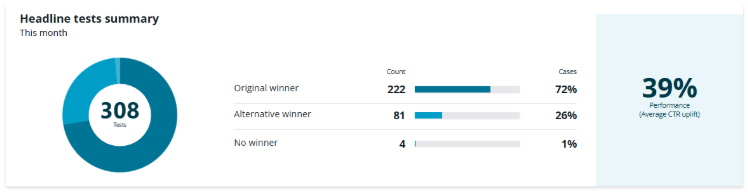
Headline Testing in practice: Anonymised results based on real-world data from an Upscore publisher.
What newsrooms can learn from their tests
Not every test delivers a big surprise. Sometimes the results simply confirm what the newsroom suspected all along. Other times, the less obvious option outperforms the clear favourite.
Both are useful. Over time, those insights add to editorial experience and help inform the next decision.
And this goes well beyond individual headlines. Every day, newsrooms decide which stories to put in front of their readers and how to attract their attention on their own sites.
With Search, Social and Discover, external platforms have a considerable say in how many readers find their way to a publisher's content. On their own sites, newsrooms have far more influence over what those readers discover next.
So perhaps, alongside asking where the next reader will come from, we should spend a little more time asking a different question:
Where will the reader who's already here click next?
Nina Berger is Product Manager at Upscore.