
 Insight
 Engage
 Convert
 Data
Data
 Grip
Grip
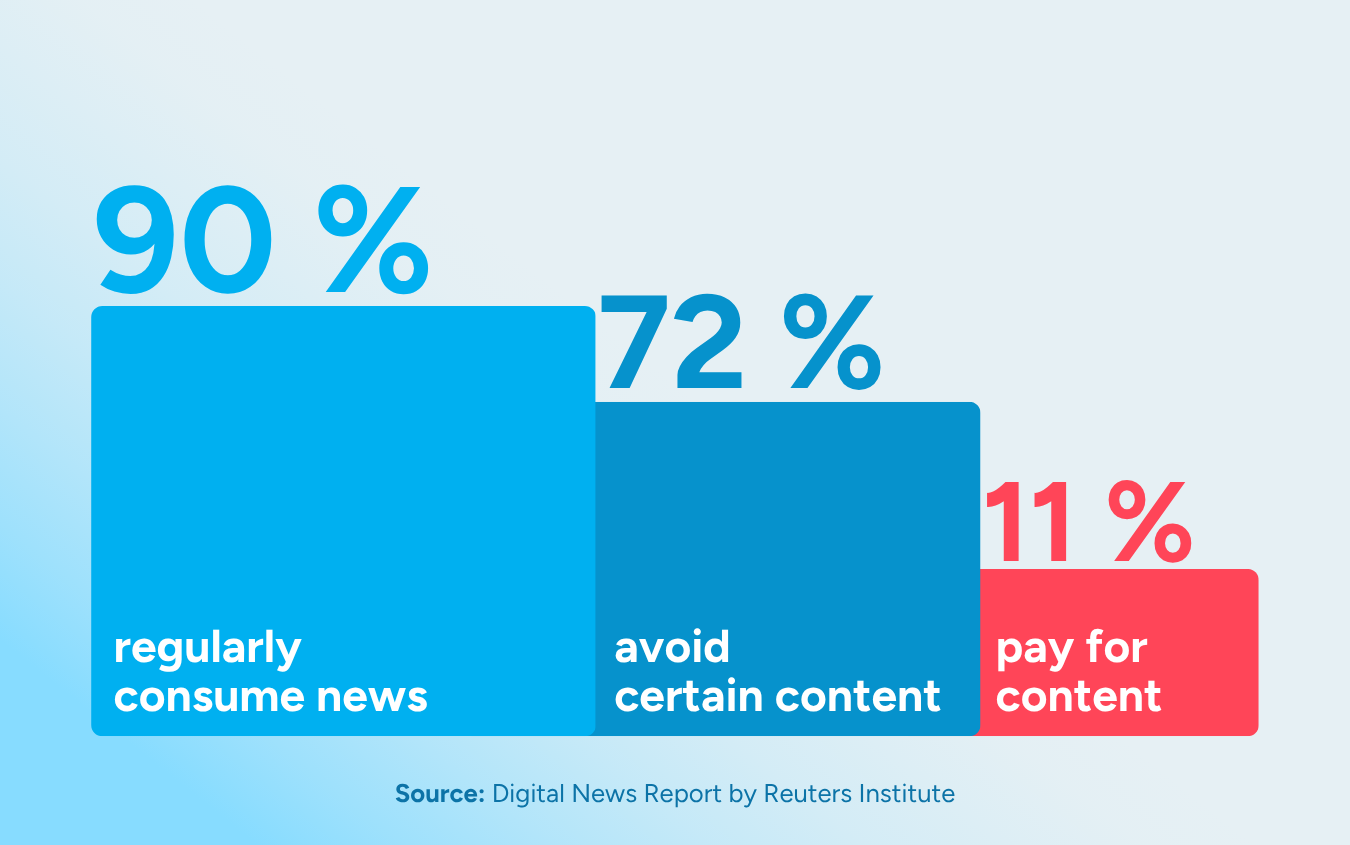
It seems like a paradox: on the one hand, interest in news is high – around 80 percent of internet users are interested or even extremely interested. But: Very few people pay for digital content.
According to the latest Digital News Report from the Reuters Institute, only between 7 and 13 percent do so in Eastern European countries such as Croatia, the Czech Republic, Serbia, and Slovakia. In Germany the figure is around 11 percent.
Where does this huge gap come from?
The reasons include, among others, the growing competition from social media platforms – especially with younger audiences – and the increasing use of AI-generated summaries. The real issue, however, lies elsewhere: The industry is struggling with growing alienation. According to the Reuters Institute, around 70 percent of people often or occasionally avoid the news – a significant increase compared to ten years ago.
So, while people do want to stay informed – otherwise there wouldn’t be such a high level of interest in the first place – they are increasingly avoiding the news, whether temporarily or when it comes to certain topics. This, of course, has a negative impact on their willingness to pay.
How can media organisations counter this trend? A look at the small group of paying users – for example, in Germany – provides some insight: most of them pay to access content they cannot find anywhere else. Conversely, this means that many media outlets are failing to meet this demand. People often perceive the majority of the content as insufficiently relevant or valuable. Put simply, publications fail to strike a chord with readers all too often.
Alongside the complex major topics of social media and AI, there’s fortunately also a straightforward solution – and it lies entirely in the hands of publishers themselves: engaging in dialogue with their audience. Media outlets that provide reliable and relevant reporting whilst actively incorporating their readers’ perspectives can bridge the gap between supply and demand. This means gathering targeted feedback from readers via usage data, as well as using qualitative approaches such as surveys, discussions or community formats to foster direct interaction. Those who are open and listen not only build trust but also create content that is genuinely relevant – and encourages people to pay.
Frauke Ladleif is Senior Expert Data & AI Strategies at Upscore